Transform Your Living Room with a Custom Entertainment Center and Bookshelf Setup
A Built In Entertainment Center With Bookshelves Creates a Cleaner, Smarter Living Room
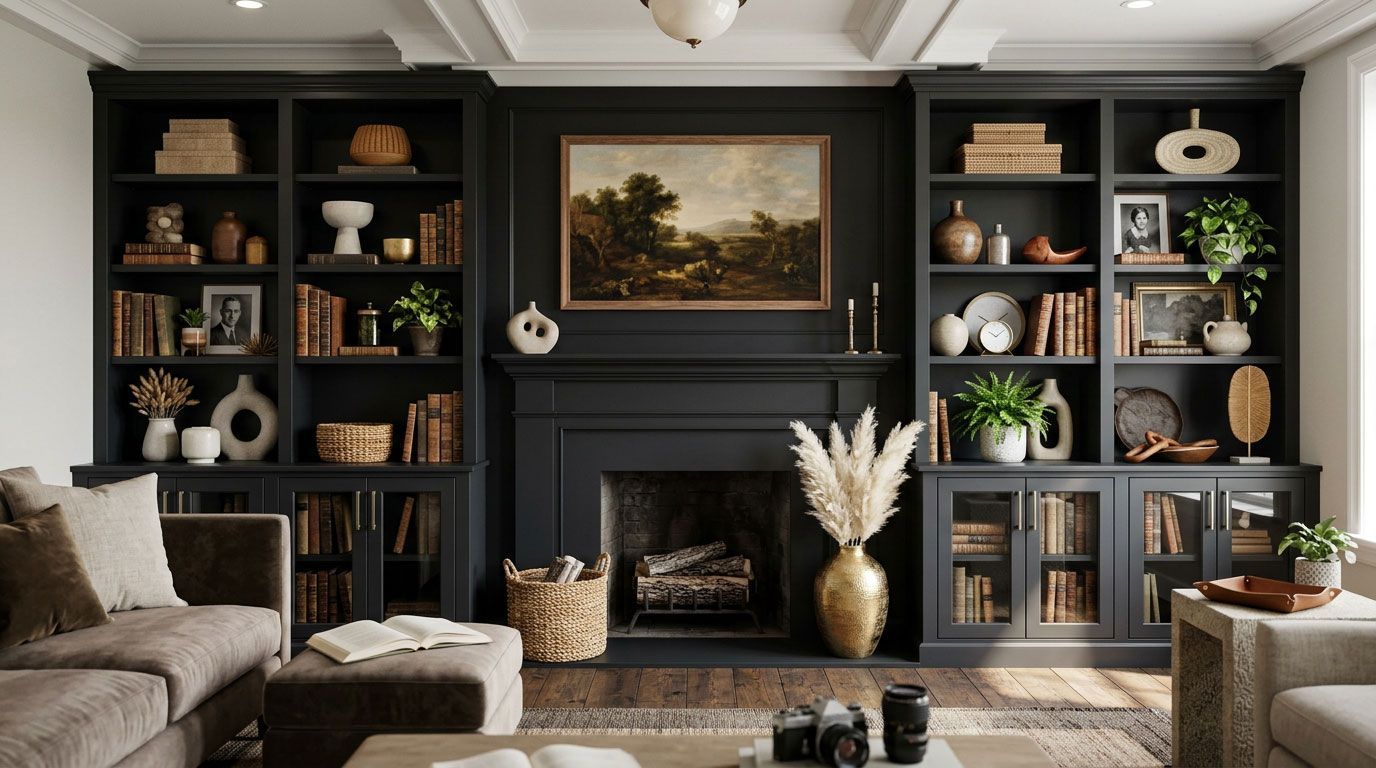
A built in entertainment center with bookshelves turns one wall into a calm, useful focal point. Start by centering the TV, placing closed cabinets below for electronics and clutter, and adding open shelves around it for books, art, and family pieces. Then match the cabinetry to your room's trim, wall color, and proportions for a seamless result.
The best designs balance three needs:
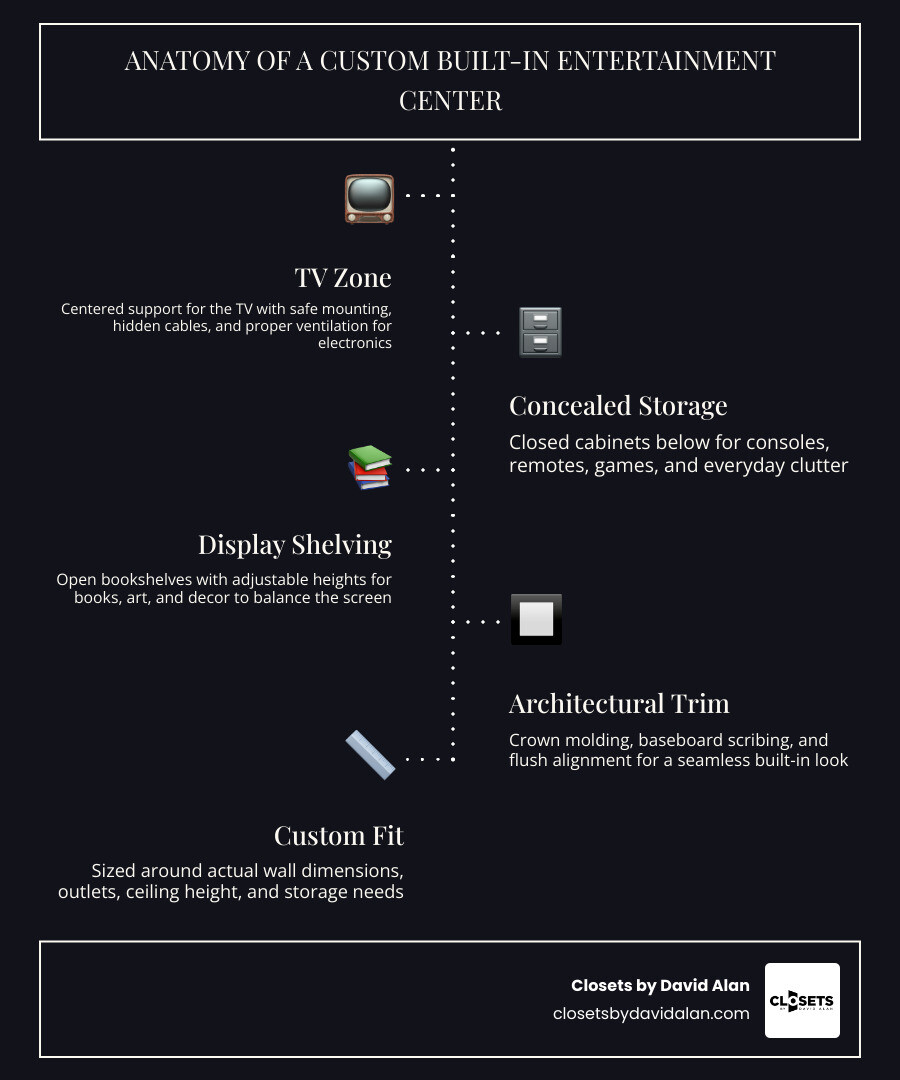
- A TV zone with safe support, hidden cables, and airflow for media components.
- Concealed storage for consoles, remotes, games, and everyday clutter.
- Display shelving with adjustable heights for books and decor that make the screen feel less dominant.
Unlike a freestanding wall unit, custom built-ins can be sized around your actual wall, outlets, baseboards, ceiling height, and storage needs. The result is less visual noise and more room for the things you want to see.
I am David Alan, President of Closets by David Alan, where I help homeowners create refined, made-to-fit storage through a white-glove design and installation process. Our experience designing luxury cabinetry informs every built in entertainment center with bookshelves, from the first layout decision through the finished details.
Similar topics to built in entertainment center with bookshelves :
Planning Your Built In Entertainment Center with Bookshelves: Sizing and Room Layout
Careful planning ensures your media wall integrates naturally into the room rather than overwhelming it. Designing a built-in requires balancing the screen's size against surrounding storage modules so the television blends into an architectural feature.
A frequent design misstep is choosing cabinetry that feels dwarfed by the screen or pinched between architectural elements; reviewing common media cabinet sizing mistakes highlights why proportion and visual weight matter. In living spaces across Pittsburgh—from historic layouts in Sewickley and Shadyside to expansive new construction in Cranberry Township and Wexford—we always tailor the cabinet profile to the ceiling height, wall studs, and natural sightlines.
Low Console vs Tall Wall-Unit Layouts
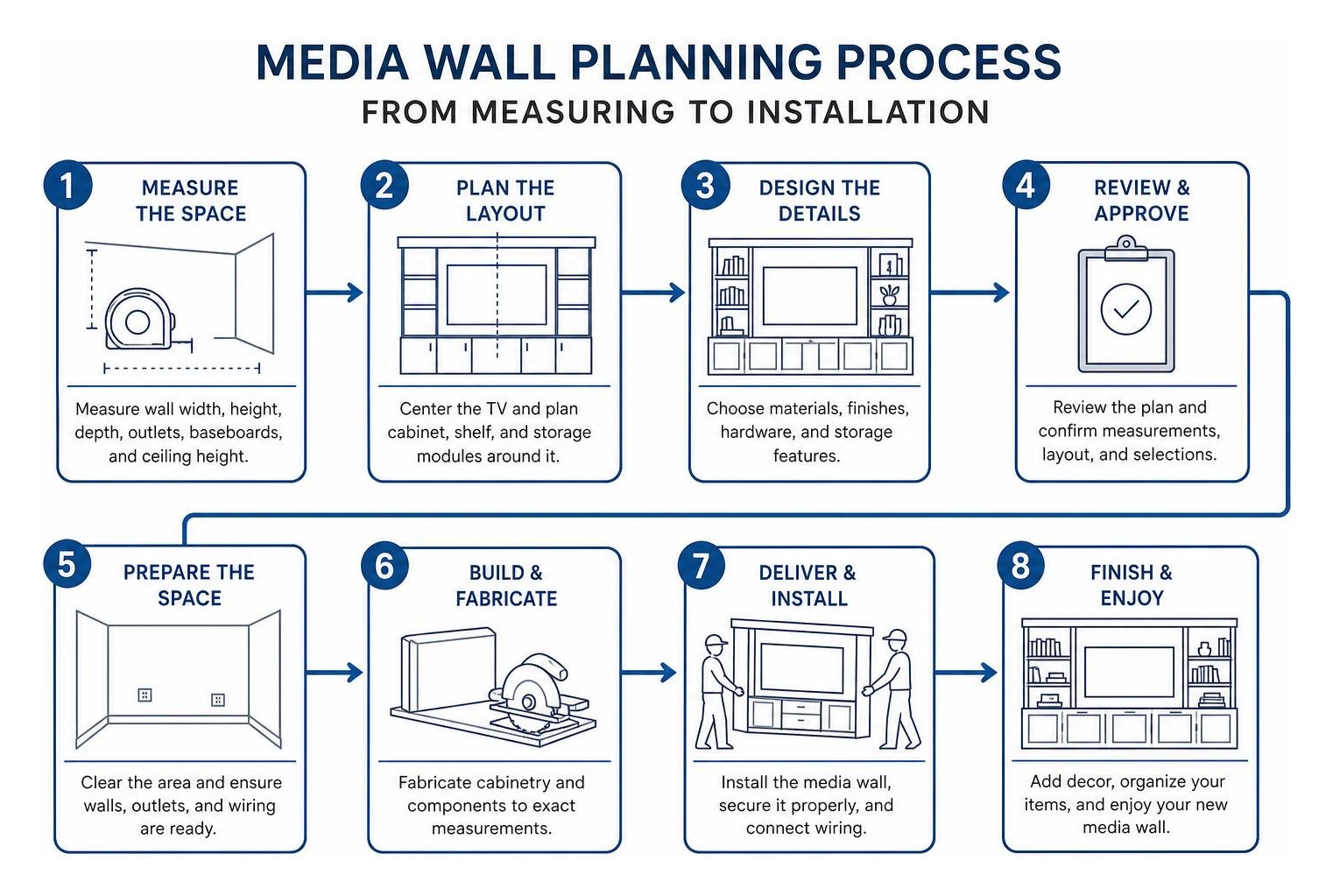
Choosing between a low-profile console setup and a full-height wall unit depends on your room's ceiling height, square footage, and storage goals:
- Low Console Style : Uses lower base cabinetry flanked by floating shelves or waist-height bookcases. This approach keeps upper wall space open, making it an excellent choice for rooms with standard eight-foot ceilings or spaces where you want to highlight decorative wall treatments, wallpaper, or natural light from nearby windows.
- Tall Wall-Unit Style : Extends bookcases and upper cabinetry directly to the ceiling, finished with integrated crown molding. This floor-to-ceiling configuration maximizes vertical storage capacity, provides a dramatic library feel, and suits open-concept family rooms or historic homes with nine- to ten-foot ceilings. In taller rooms, integrating a rolling library ladder offers both practical access to upper shelves and classic architectural character.
Accurate Measurements for TV, Outlets, and Surrounding Bookshelves
Precise field measurements prevent installation delays and ensure high-end fitment:
- Measure True Screen Dimensions : Televisions are sold by diagonal screen size, but cabinetry requires measuring the actual outer width, height, and depth, including the bezel and stand.
- Calculate Clearance Margins : Always leave a buffer of at least 2 to 4 inches on the top, bottom, and sides of the TV. This space accommodates wall-bracket articulation, easy cable hookups, and future screen upgrades.
- Plan Depth Transitions : Build the lower media credenza deeper (typically 18 to 22 inches) to house deep audio-visual receivers and gaming hardware. Step the flanking bookshelves back to a shallower depth (12 to 14 inches) to maintain comfortable room walkways and prevent the upper unit from casting dark shadows over the console.
- Map Outlets and HVAC Vents : Note the locations of existing wall receptacles, cable drops, and floor or wall HVAC registers. Custom designs incorporate rear access cutouts for electrical boxes and custom toe-kick duct transitions so air flows unobstructed into the living space.
Designing Storage: Combining Open Shelving, Closed Cabinets, and Media Consoles
An organized living room relies on intentional storage zoning. By pairing closed base storage with open display shelving, you keep everyday utility items concealed while highlighting curated decor.
Our team designs custom entertainment centers that balance concealed storage with display elements tailored to your family's routines.
| Storage Element | Best Suited For | Key Functional Benefit |
|---|---|---|
| Open Adjustable Shelving | Hardcover books, decorative ceramics, framed photos, small sculptures | Keeps the media wall visually open; easily reconfigured as your collection evolves. |
| Closed Base Cabinets | Streaming hubs, power strips, board games, seasonal accessories | Completely hides cord clutter and plastic components behind solid door fronts. |
| Glass-Front Cabinets | Art books, fragile collectibles, delicate glassware | Protects items from household dust while maintaining visible display appeal. |
| Deep Full-Extension Drawers | Video game controllers, remote controls, cables, media discs | Provides full overhead visibility and smooth access without rummaging. |
Curating and Styling the Bookshelf Display
Open shelving turns a standard TV wall into an elegant personal library. Styling these shelves successfully requires a balance of visual weight:
- Vary Object Orientations : Alternate between vertical book stacks supported by weighted bookends and horizontal stacks topped with small decorative items.
- Embrace Negative Space : Avoid packing every inch of shelf space. Leaving open breathing room around statement objects lets individual pieces stand out.
- Integrate Accent Illumination : Built-in, low-voltage LED channel lighting under shelf lips or along vertical stiles casts a warm, dimmable glow over your collection, adding depth during evening viewing.
- Adjustable Shelf Pins : Using precision-drilled shelf pins lets you quickly adjust shelf heights to accommodate oversized art monographs or tall pottery. Explore our approach to custom bookcases for versatile shelf integration ideas.
Concealed Storage for Electronics, Gaming Consoles, and Component Management
Modern entertainment systems require dedicated spaces that keep hardware organized without blocking functional performance:
- Acoustically Transparent and Mesh Doors : Fabric or micro-perforated metal door inserts allow sound and remote signals to pass through while keeping equipment hidden.
- IR Repeater Kits : Infrared repeaters allow standard handheld remotes to control devices locked behind solid wood doors.
- Dedicated Console Bays : Sized compartments for upright gaming consoles provide dedicated power access and prevent cables from tangling with other devices.
- Concealed Wire Pass-Throughs : Internal notches and rubber-lined grommets allow cables to route freely between adjacent cabinet bays without cutting into front-facing panels.
Essential Technical and Safety Considerations: Ventilation, Cable Management, and Stability
High-performance electronics generate considerable heat, and large millwork installations carry significant physical weight. Planning for thermal airflow, secure wire management, and structural anchoring ensures a reliable, safe setup.
Electronics Ventilation and Thermal Regulation
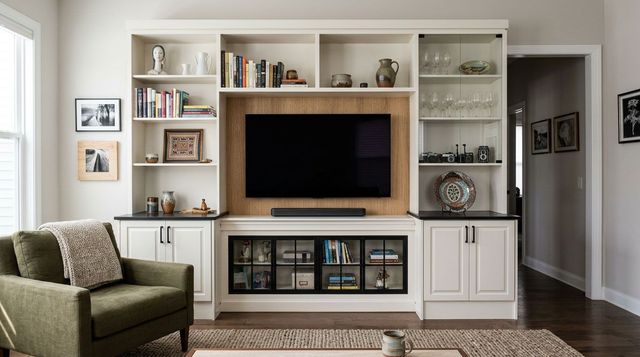
Enclosing high-draw components like modern gaming consoles, AV receivers, and network switches inside closed cabinetry without airflow causes thermal throttling and shortens hardware lifespans:
- Passive Airflow Routes : Cut intake slots in the bottom base panel or toe-kick and exhaust vents at the top rear of the cabinet. Natural convection pulls cooler room air from below and exhausts warm air out the upper rear.
- Active Cooling Fans : In high-density equipment cabinets, install whisper-quiet, thermostatically controlled USB exhaust fans that activate automatically when internal temperatures exceed safe thresholds.
- Component Spacing : Maintain at least 2 to 3 inches of clearance around the top and sides of all electronic equipment to allow heat dissipation.
Weight Capacities, Anti-Tip Anchoring, and Child Safety
Books and solid wood components are heavy, making structural stability essential:
- Wall Stud Anchoring : Anchor the main vertical structural panels (gables) directly into wall studs using heavy-duty structural screws. Never rely on drywall anchors alone for tall wall cabinetry.
- Shelf Span Deflection Limits : Standard 3/4-inch furniture-grade plywood or solid hardwood supports substantial weight across a 30- to 36-inch span. Spans wider than 36 inches require a solid wood front facing edge (cleat) or center support to prevent visible sagging under heavy book loads.
- Tempered Safety Glass : Any glass panel used in lower doors or display shelving should be tempered safety glass to prevent hazardous shattering.
- Soft-Close Safety Hinges : Premium soft-close hinges and under-mount drawer slides prevent slamming and protect fingers.
Material Choices, Finishes, and Architectural Styles
Selecting the right materials and design details ensures your built-in complements your home's existing interior architecture.
Matching Architectural Styles: Modern, Farmhouse, and Traditional
- Modern & Contemporary : Defined by clean lines, flat slab cabinet doors, push-to-open hardware, and integrated LED strip lighting. Dark ebony stains, matte black, or warm rift-sawn white oak veneers deliver an understated, sophisticated presence.
- Transitional & Farmhouse : Features classic Shaker door profiles, soft off-white or creamy painted finishes, warm wood open shelving, and understated iron or brushed brass hardware.
- Traditional & Historic : Showcases raised panel doors, fluted side pilasters, rosette blocks, and rich furniture stains on cherry, walnut, or maple. Incorporating graceful arch bookshelf elements adds bespoke architectural elegance suited to historic homes.
Integrating Architectural Trim and Built-In Look Accents
Achieving a true built-in look requires custom trim carpentry that integrates the unit into the room's framework:
- Baseboard Scribing : Rather than butting cabinetry against existing floor molding, professional installers remove the baseboard or precision-scribe the cabinet toe-kick around the molding for a seamless floor transition.
- Continuous Crown Molding : Running crown molding across the top of the entertainment center and tying it into the room's ceiling trim makes the unit look like an original part of the home.
- Face-Frame Millwork : Solid wood face frames bridge individual cabinet boxes, eliminating visible vertical seams. For a deeper look at construction techniques, explore our guide on building bookcase built ins.
Custom Built-In Design: Cost, Longevity, and Value
A custom media wall is a long-term investment in your home's daily comfort, aesthetic appeal, and functionality.
Comparing Custom Built-In Options and Bespoke Installation
While flat-pack modular units offer temporary storage, custom built-in cabinetry provides distinct structural advantages:
- Precision Sizing : Custom cabinetry is built to the exact millimeter of your wall width and ceiling height, eliminating awkward dust gaps and off-center TV cutouts.
- Material Durability : Commercial flat-pack units frequently use thin paper foils over low-density particleboard that can bow under book loads or delaminate over time. Custom construction relies on furniture-grade hardwood plywood, solid wood face frames, and multi-step factory finishes designed for lasting durability.
- Architectural Cohesion : Custom units share paint formulations, wood species, and trim profiles with the rest of your home, creating a cohesive, high-end look.
Budget Ranges and Return on Investment
Investing in custom cabinetry enhances your living space and adds measurable value to your property. High-end buyers appreciate dedicated, organized storage and integrated media walls that eliminate dangling cables and bulky furniture.
When planning your project, budget considerations generally center on overall wall dimensions, premium material choices (such as solid hardwoods versus painted finishes), specialty hardware, integrated LED systems, and custom millwork detailing like fluted columns or arched headers.
Frequently Asked Questions About Entertainment Center Bookshelves
How Does a Custom Built-In Entertainment Center Achieve a Seamless Look?
A custom built-in achieves its seamless look through precise on-site scribing, integrated architectural trim, and flush component alignment. Installers cut side filler panels to mirror any slight bows in the existing drywall, wrap continuous crown molding along the ceiling interface, and integrate matching baseboards along the toe-kick. This eliminates the gaps, shadows, and awkward proportions common to standalone furniture.
How much weight can the shelves in a built in entertainment center with bookshelves hold?
Weight capacity depends on shelf material, thickness, and span length:
- A standard 3/4-inch furniture-grade plywood shelf spanning 30 inches comfortably supports 35 to 45 pounds per linear foot (roughly 90 to 110 pounds total) with minimal deflection.
- Shorter spans (24 to 28 inches) or shelves reinforced with a solid hardwood front lip (cleat) can safely hold over 120 pounds , easily supporting dense rows of oversized art books, encyclopedias, and heavy decorative sculptures.
How do I hide and manage all cables inside an integrated TV bookcase wall?
Effective cable management begins behind the wall and continues through internal cabinet chases:
- In-Wall Power and AV Chases : Run low-voltage cables (HDMI, optical, ethernet) and high-voltage power lines through code-compliant in-wall conduits behind the TV mount.
- Internal Pass-Through Grommets : Line pre-drilled access holes between cabinet partitions with rubber grommets to route cords between components without visible drooping.
- Removable Backing Panels : Incorporate magnetic or screw-release access panels inside lower cabinets to allow quick servicing of wall outlets, surge protectors, and network switches without dismantling the millwork.
Conclusion
A well-crafted entertainment center balances high-performance media technology with the classic charm of a home library. By tailoring dimensions to your wall, planning dedicated ventilation for electronics, and integrating refined millwork, you create a clutter-free living room focal point built to last.
At Closets by David Alan, we provide homeowners throughout the greater Pittsburgh area—including Sewickley, Fox Chapel, Wexford, Cranberry Township, Mt. Lebanon, and Upper St. Clair—with an end-to-end custom cabinetry experience. From initial 3D digital renderings through white-glove installation, we bring your vision to life with exceptional craftsmanship and premium materials.
Explore our portfolio of custom living spaces and built-in solutions to schedule your design consultation and start planning your dream media wall.
Recent Posts